Undercoating Near Me: Oil, Rubberized & Wax Coatings Compared for Illinois
Google Reviews
What our Customers say
Heading 1
Heading 2
Heading 3
Heading 4
Heading 5
Heading 6
Lorem ipsum dolor sit amet, consectetur adipiscing elit, sed do eiusmod tempor incididunt ut labore et dolore magna aliqua. Ut enim ad minim veniam, quis nostrud exercitation ullamco laboris nisi ut aliquip ex ea commodo consequat. Duis aute irure dolor in reprehenderit in voluptate velit esse cillum dolore eu fugiat nulla pariatur.
Searching undercoating near me in Illinois usually means you are thinking about road salt, winter moisture, rust, or keeping the underside of your vehicle in better condition over time. That concern makes sense in Naperville, IL, Countryside, IL, and the surrounding Chicago suburbs, where winter road treatment is a regular part of driving.
The Illinois Department of Transportation says it uses rock salt along with liquid treatments such as salt brine during winter operations. IDOT reported using more than 357,500 tons of salt statewide through April 2026. Chloride-based deicing materials can contribute to vehicle corrosion when they remain on exposed metal surfaces.
At Z Tech Window Tinting, we provide undercoating and rustproofing for drivers in Naperville, IL, Countryside, IL, and nearby communities.
One of the first questions vehicle owners ask is which type of coating makes the most sense.
Oil-based, rubberized, and wax-based coatings approach corrosion protection in different ways. Each has traits worth understanding before you decide what belongs under your car, truck, or SUV.
An undercoating near me search becomes much more common once winter arrives.
Illinois roads are regularly treated with deicing materials during snow and ice events. IDOT says rock salt is its main deicing material, with liquid chemicals such as salt brine also used in winter road treatment.
That helps keep roads passable, but it also means the underside of your vehicle can be exposed to salt, slush, water, dirt, and road debris for months at a time.
The Federal Highway Administration notes that chloride-based deicers such as sodium chloride, calcium chloride, and magnesium chloride can corrode motor vehicles.
Vehicle manufacturers have issued similar warnings.
A Kia service campaign published through the National Highway Traffic Safety Administration states that corrosive materials used for snow and ice removal can collect on a vehicle’s underbody. If those materials remain there, accelerated rusting can occur.
Undercoating Near Me: Oil, Rubberized &Amp; Wax Coatings Compared For Illinois Naperville, Il & Countryside, Il | 3Tdmef5Zzotnuso Nkek Rnqyhxls
Another manufacturer bulletin hosted by NHTSA warns that road salt used in winter can cause vehicle parts to rust severely and recommends washing vehicles after driving on salted roads.
That is the environment Illinois drivers are dealing with every winter.
What Undercoating Does
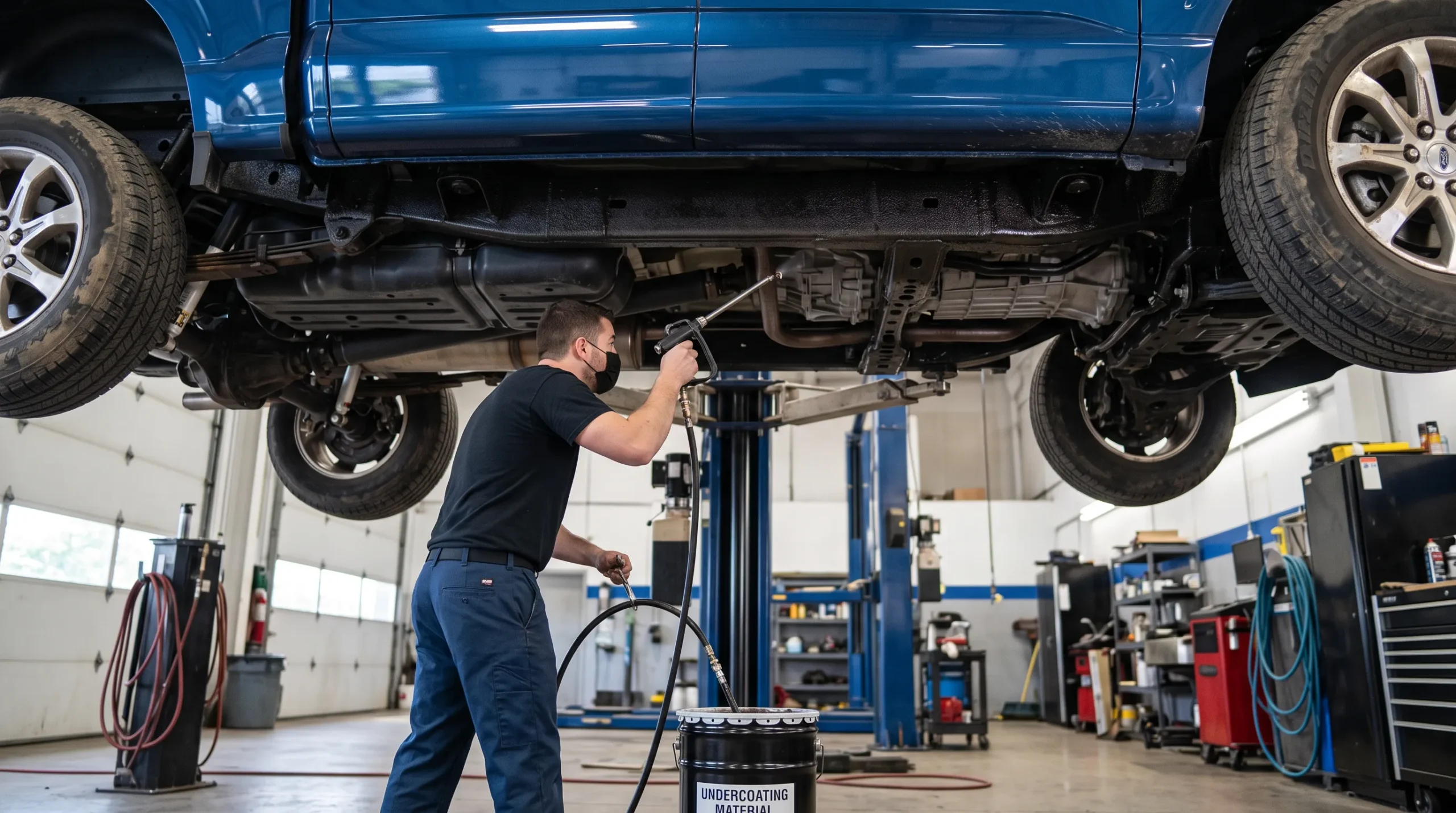
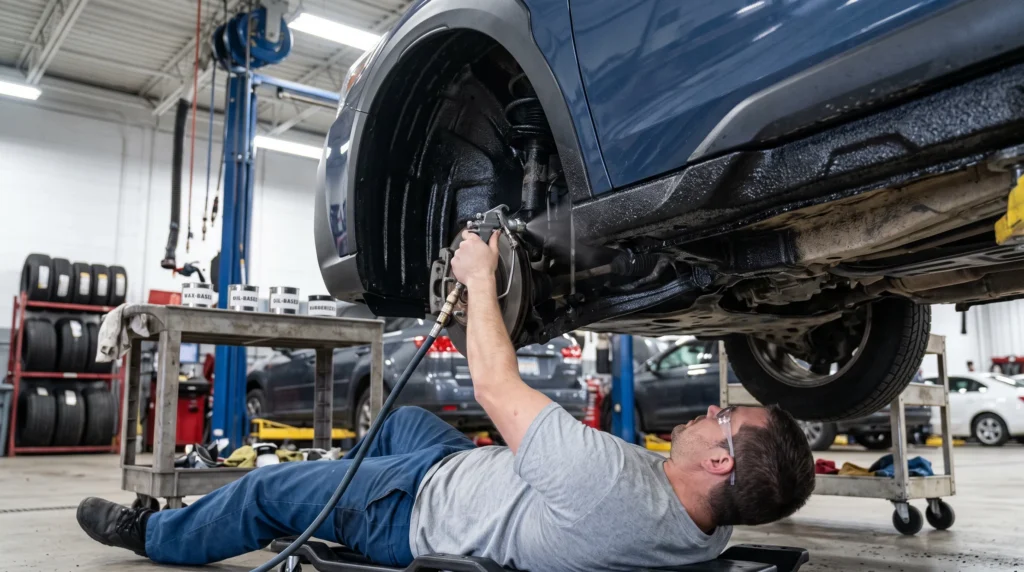
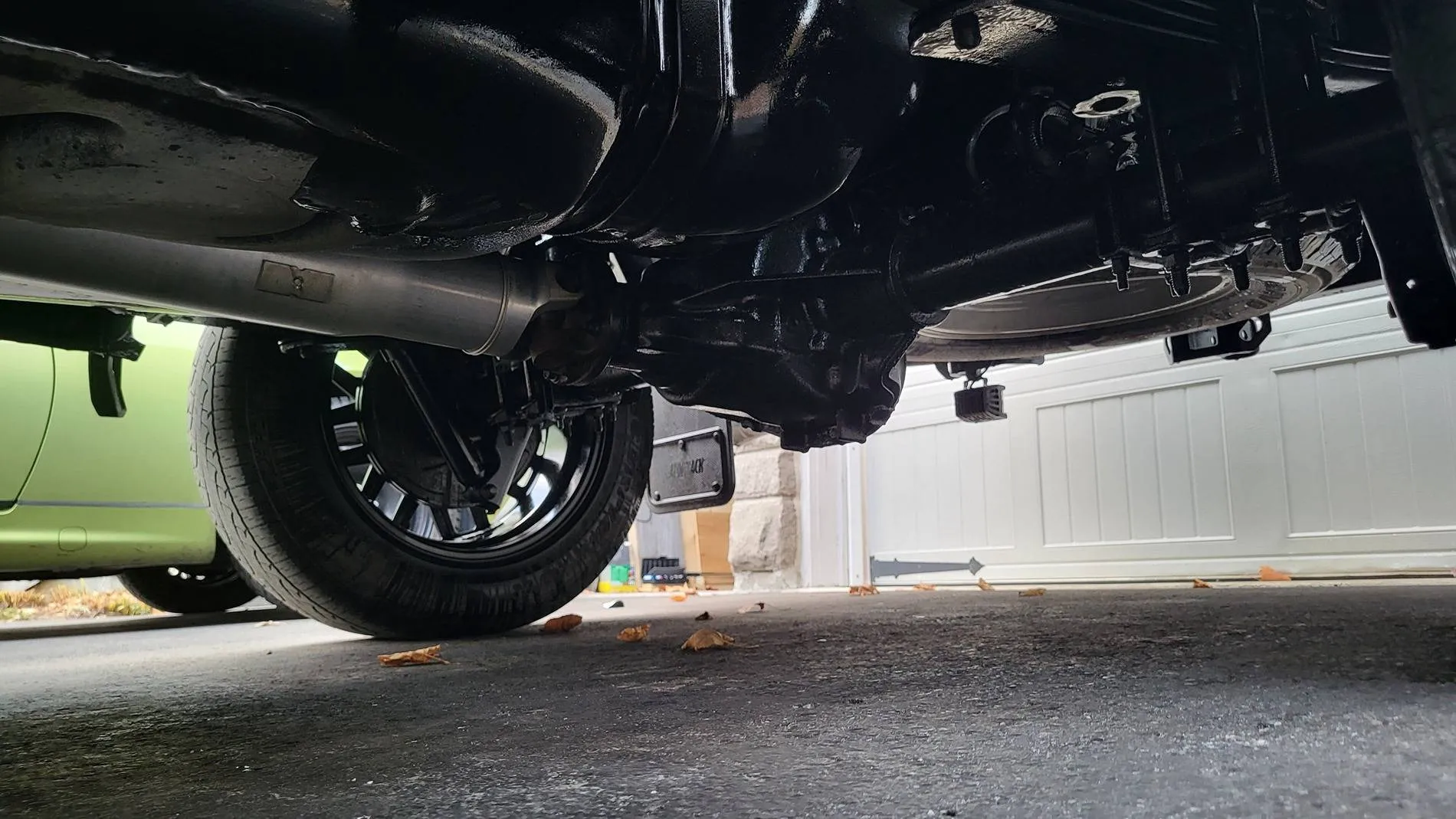
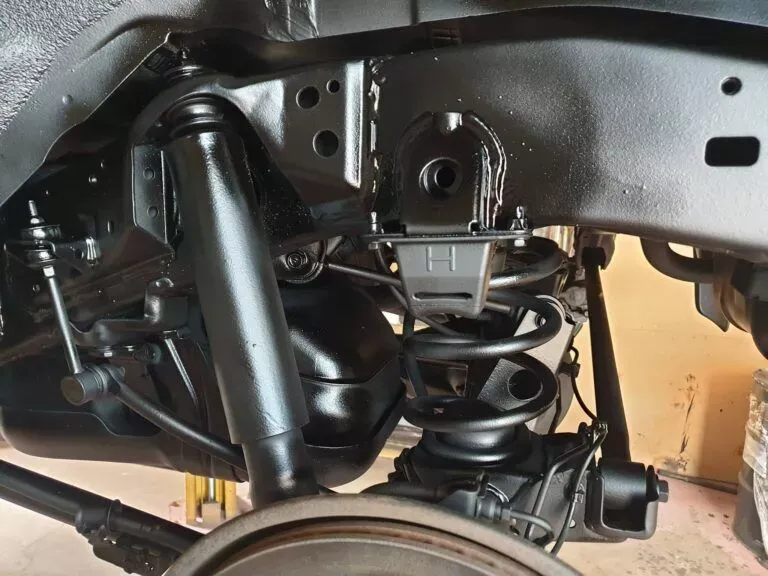
Undercoating places a protective material on selected parts of the vehicle’s underside.
The goal is to create a layer between vulnerable surfaces and things they encounter on the road, including:
Salt
Water
Snow
Slush
Mud
Gravel
Road debris
Moisture
Dirt
The exact behavior of that protective layer depends on the coating.
Some products remain softer and creep into seams.
Others dry into a thicker shell.
Wax coatings usually form a water-resistant film that can reach enclosed areas and seams depending on the formulation and application method.
This difference is why asking, “What kind of undercoating do you use?” can be more useful than asking whether a shop offers undercoating at all.
Oil-Based Undercoating
Oil-based undercoating is usually a soft coating that does not dry into a hard shell.
Its main attraction is movement.
The material can creep into seams, joints, crevices, and areas where a rigid coating may have more difficulty reaching.
How Oil-Based Undercoating Works
Oil-based coatings are designed to coat metal and displace or resist moisture.
Because they stay relatively soft, they can continue moving into small gaps after application.
This type of coating is often associated with annual rust-control treatments in regions where road salt is common.
Benefits of Oil-Based Undercoating
Oil coatings may appeal to drivers because they can:
Reach seams and crevices
Remain flexible
Coat irregular metal surfaces
Be reapplied when needed
Work well in enclosed or hard-to-reach areas
Things to Consider With Oil-Based Coatings
A soft coating can wash or wear away over time.
That means inspections and repeat applications may be part of ownership.
Oil-based products can also attract dust and road grime because the coating remains tacky.
For someone searching undercoating near me because they want a permanent-looking black finish, an oil coating may not provide the appearance they expect.
Its role is more about coating the metal than creating a thick textured shell.
Rubberized Undercoating
Rubberized undercoating takes a different approach.
It dries into a thicker, flexible barrier over the treated surface.
3M describes its Rubberized Undercoating as an anti-corrosive coating made to protect vehicle undercarriages from rust and abrasion. The company says the coating resists chipping, weathering, and exterior rust while creating a textured finish.
3M also makes Dynatron Dyna-Pro Paintable Rubberized Undercoating, which it says resists salt spray, chipping, weathering, and dust.
How Rubberized Undercoating Works
Rubberized material is sprayed or applied over properly prepared surfaces and allowed to form a protective layer.
Depending on the product, it may be used on areas such as:
Floor pans
Wheel wells
Frame areas
Inner fenders
Quarter panels
Other suitable underbody sections
The resulting coating is thicker than a typical oil film.
Benefits of Rubberized Undercoating
A rubberized coating can offer:
Resistance to stone impact
Protection against abrasion
A barrier against moisture
Protection from salt spray
A textured appearance
Some sound-deadening properties
3M states that its rubberized undercoating can also help reduce road noise.
That makes rubberized coatings appealing to truck and SUV owners who want both underbody coverage and some protection from gravel and road debris.
The Catch With Rubberized Coatings
Surface condition matters.
A coating should not simply be sprayed over loose rust, trapped moisture, grease, dirt, or heavy corrosion.
If contamination remains beneath a coating, covering it does not make the underlying problem disappear.
Preparation and inspection come first.
This is one reason professional application matters.
Wax-Based Undercoating
Wax-based corrosion coatings generally create a water-resistant film over metal.
They are often used in areas where a flexible film is useful, including cavities, seams, doors, rocker panels, frame sections, and other enclosed spaces.
How Wax Coatings Work
Wax products are typically sprayed as a liquid.
The carrier evaporates, leaving a waxy protective film behind.
Some wax coatings are formulated to creep before setting, helping the material reach seams and overlapping pieces of metal.
Unlike a thick rubberized coating, wax usually creates a thinner layer.
Benefits of Wax-Based Undercoating
Wax coatings can be useful because they may:
Resist water
Reach seams and cavities
Remain somewhat flexible
Coat enclosed metal areas
Be renewed when needed
Leave a thinner film than rubberized products
Wax-based rust protection is often discussed alongside cavity protection because it can be applied inside areas that are difficult to coat with a thick underbody product.
Things to Consider With Wax Coatings
Wax can wear away.
High-pressure washing, road spray, heat, and abrasion can all affect exposed areas.
That means inspections matter.
A wax coating also does not offer the same thick impact barrier that many drivers associate with rubberized undercoating.
Oil vs Rubberized vs Wax Undercoating
Here is a straightforward comparison for anyone researching undercoating near me in Illinois.
Coating Type
Finish
Good Fit For
Main Trait
Inspection Needed
Oil-Based
Soft and oily
Seams, joints, hidden areas
Creeps into small spaces
Yes
Rubberized
Thick, textured layer
Exposed underbody sections
Helps resist abrasion, chips, moisture, and salt spray
Yes
Wax-Based
Thin waxy film
Cavities, seams, enclosed metal
Water-resistant coating with good cavity coverage
Yes
None of these descriptions means one material should automatically be applied everywhere underneath every vehicle.
Different sections of a vehicle face different conditions.
Wheel wells see heavy road spray and debris.
Inside rocker panels, abrasion may be less of an issue, but moisture reaching seams is still a concern.
A proper rust-protection plan can take those differences into account.
Which Coating Is Better for Illinois Winters?
There is no single answer for every vehicle.
Illinois winters expose cars to a mix of salt, liquid deicers, snow, water, slush, dirt, and changing temperatures.
That means the best choice depends partly on where the coating will be applied.
Rubberized Undercoating for Exposed Areas
A properly applied rubberized coating can make sense on suitable exposed underbody areas where abrasion and road spray are concerns.
3M says its rubberized undercoatings are designed to resist rust, abrasion, chipping, weathering, and salt spray.
Oil Coatings for Seams and Crevices
An oil-based product may make sense where creeping into joints and overlapping metal is the priority.
The coating stays soft and can continue moving into small spaces.
Wax Coatings for Cavities
Wax is often considered for cavities and enclosed areas where a thinner water-resistant film is useful.
What this means is that coating type should match the part of the vehicle being protected rather than being chosen by name alone.
Z Tech can inspect your vehicle and discuss the type of coverage that fits its current condition.
Undercoating vs Rustproofing
People often use undercoating and rustproofing as if they mean exactly the same thing.
They are closely related, but they can describe different areas of treatment.
Undercoating usually refers to protective material applied to the exposed underside of the vehicle.
Rustproofing may also include enclosed areas such as:
Rocker panels
Door cavities
Frame cavities
Seams
Body channels
Hidden metal sections
Those enclosed areas can collect moisture even though they are not exposed like a wheel well or floor pan.
Can You Undercoat a Vehicle That Already Has Rust?
Sometimes, but the rust needs to be evaluated first.
There is a big difference between light surface oxidation and advanced corrosion.
Undercoating does not rebuild missing metal.
It also does not repair structural rust.
If a vehicle already has corrosion, loose material may need to be addressed before applying a protective coating.
The real question is what condition the metal is in underneath the vehicle.
Areas worth checking include:
Frame rails
Suspension mounting areas
Floor pans
Rocker panels
Brake-line areas
Wheel wells
Crossmembers
Body seams
If severe rust is present, coating over it is not a substitute for repair.
A manufacturer bulletin available through NHTSA recommends having severe corrosion repaired after it is found.
Why Surface Preparation Matters
Good undercoating starts with the surface.
Dirt, loose rust, salt residue, grease, mud, and moisture can interfere with coating contact.
That is why the underside should be inspected and prepared before the coating is applied.
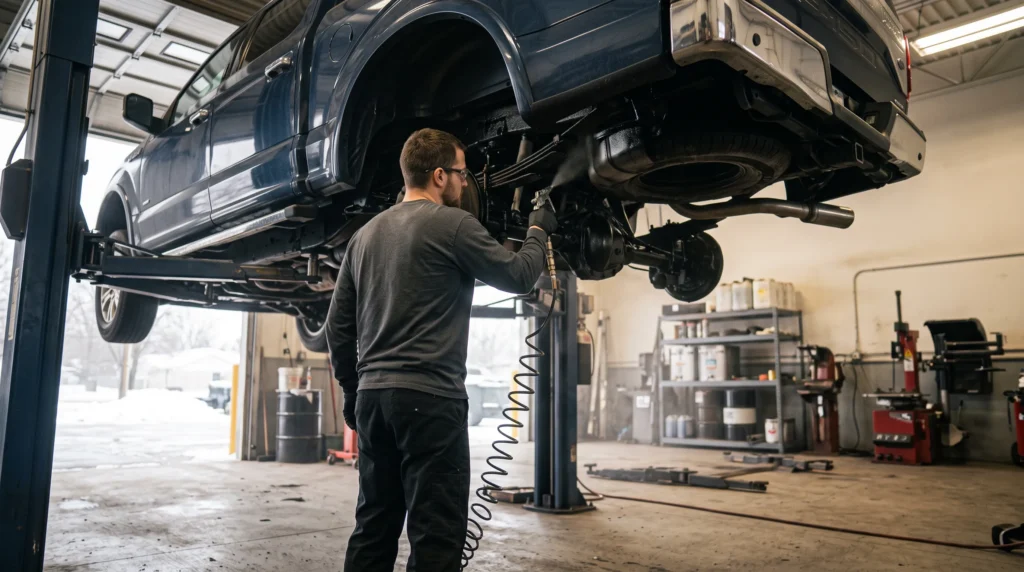
Depending on the vehicle, preparation may involve cleaning, drying, removing loose material, and masking areas that should not receive coating.
Certain parts should not be blindly sprayed.
These may include components such as:
Exhaust surfaces
Brake parts
Drain openings
Sensors
Moving parts
Service points
The exact exclusions depend on the vehicle and product being used.
A professional installer should understand both the coating and the vehicle before application begins.
Does Undercoating Reduce Road Noise?
Some products can.
3M states that its Rubberized Undercoating has sound-deadening properties and can help reduce road noise.
Its Body Schutz Rubberized Coating is also promoted for corrosion protection and road-noise reduction.
A thick coating applied in suitable areas can help damp vibration and sound transmitted through panels.
That does not mean undercoating will make every vehicle quiet.
Tire design, glass, suspension, body construction, road surface, and cabin insulation still play large roles in how much noise you hear.
Think of sound reduction as a possible added benefit of certain products rather than the only reason to undercoat a vehicle.
How Often Should Undercoating Be Checked?
Every undercoating should be inspected periodically.
The timing depends on the product, vehicle use, storage, mileage, and exposure.
A truck driven through snow, gravel, mud, and road salt faces different wear than a weekend vehicle stored indoors.
Inspection areas can include:
Wheel wells
Jacking points
Frame sections
High-spray areas
Edges of existing coating
Areas behind tires
Sections exposed to gravel
Watch for worn coating, chips, peeling, exposed metal, or new corrosion.
Oil and wax coatings may need renewal because they can wear or wash away.
Rubberized coatings should also be checked for damaged sections.
Washing Still Matters After Undercoating
Undercoating does not mean you should stop washing the underside of your vehicle.
Road salt can settle in places that are not coated or remain trapped around suspension parts, brake components, shields, and other areas.
Manufacturer guidance published through NHTSA recommends regular washing after vehicles are driven on salted roads.
A Hyundai service campaign available through NHTSA also recommends undercarriage washing during snowy conditions and after winter storms to remove salt.
So even with undercoating near me service completed, winter washing remains part of corrosion care.
Undercoating Service Near Naperville, IL
Drivers looking for undercoating near me in Naperville, IL can visit Z Tech Window Tinting at:
Z Tech Window Tinting 1572 W Ogden Ave Naperville, IL 60540 Phone: (630) 355-9555 Hours: Monday through Saturday, 8:30 AM to 5:00 PM
Z Tech is a family-owned automotive care and restyling business that has served Chicago’s west suburbs since 1975.
Our Naperville location has more than 375 five-star reviews.
We also serve drivers from our Countryside, IL shop:
Z Tech Window Tinting 9825 W 55th St #D Countryside, IL 60525 Phone: (708) 354-9555 Hours: Monday through Saturday, 8:30 AM to 5:00 PM
Our Countryside location has more than 365 five-star reviews.
Customers visit our Naperville location from nearby communities including:
Aurora, IL
Lisle, IL
Warrenville, IL
Plainfield, IL
Bolingbrook, IL
Woodridge, IL
Downers Grove, IL
Darien, IL
Westmont, IL
Oak Brook, IL
Undercoating Near Me: Oil, Rubberized &Amp; Wax Coatings Compared For Illinois Naperville, Il & Countryside, Il | 6Tbanc E4Qhwperacofrw Hmv7Wo7S
If winter salt is the reason you started searching for undercoating near me, it is worth having the underside inspected before another season of Illinois winter driving.
Other Vehicle Protection Services at Z Tech
Rust protection is one part of protecting a vehicle from Illinois conditions.
Z Tech offers several other services for exterior and underbody care.
Rustproofing
Our rustproofing service focuses on corrosion protection for areas that may include hidden seams and cavities.
This can work alongside undercoating when a vehicle needs protection in both exposed and enclosed areas.
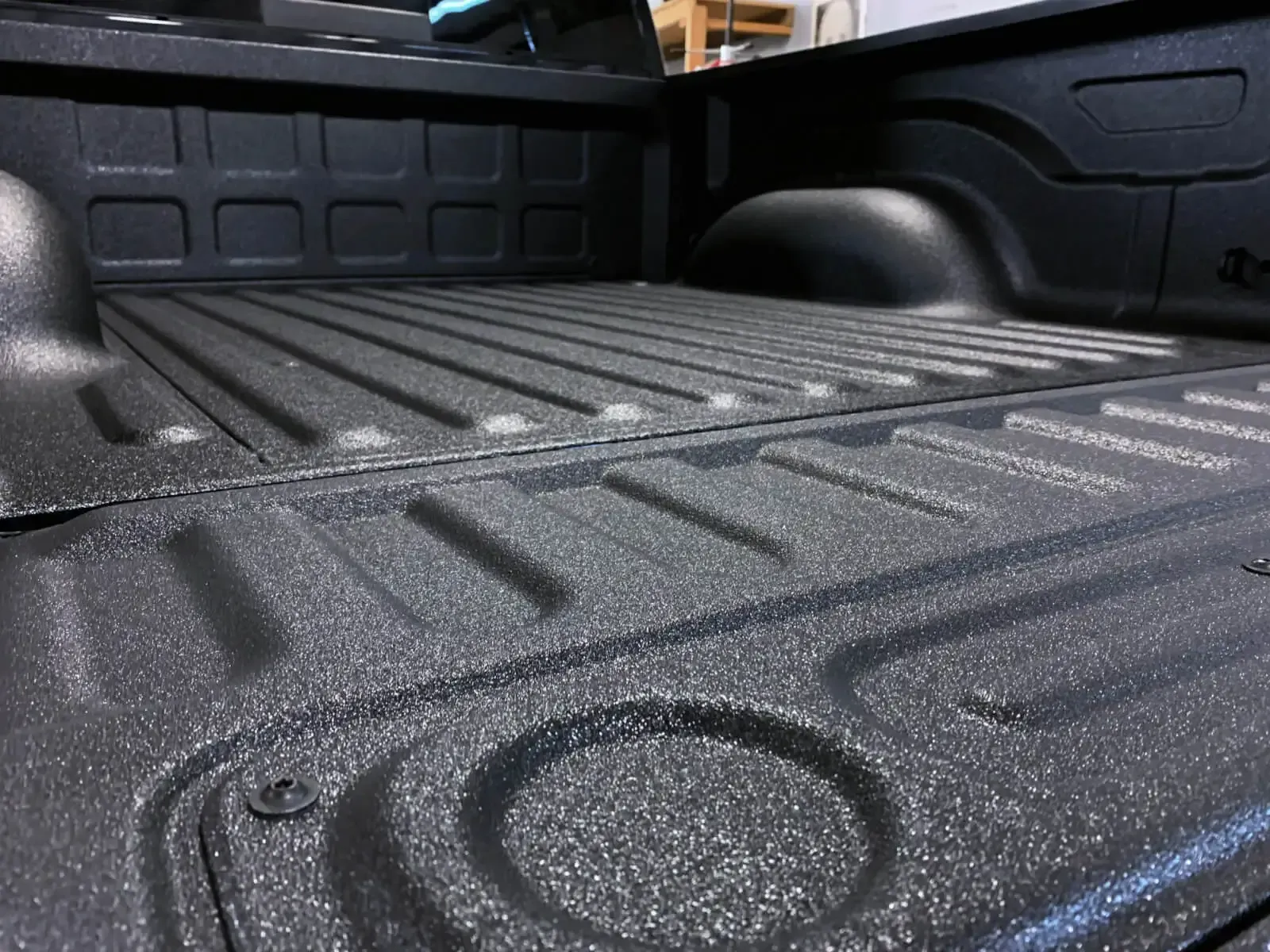
Spray-On Bed Liner
Truck owners can also ask about spray-on bed liner for pickup beds exposed to cargo, weather, and everyday use.
Paint Protection Film
Road salt is not the only thing Illinois roads throw at a vehicle.
Stone chips and road debris can damage painted exterior surfaces. Z Tech installs paint protection film for drivers who want a clear protective layer on painted panels.
Undercoating, rustproofing, PPF, and ceramic coating protect different sections of the vehicle, so the right service depends on what you are trying to protect.
Undercoating Near Me FAQs
1. What type of undercoating is best for Illinois?
There is no one coating that is automatically right for every vehicle. Rubberized coatings can work well on suitable exposed areas where salt spray, moisture, stones, and abrasion are concerns. Oil coatings can creep into seams and joints, while wax coatings are often used in cavities and enclosed metal sections.
2. Is rubberized undercoating good for road salt?
3M states that its rubberized undercoating products are made to resist corrosion, weathering, abrasion, and salt spray. Proper surface preparation and correct application are still necessary before coating the underside.
3. Is oil undercoating better than rubberized undercoating?
They work differently. Oil remains soft and can creep into seams and small gaps. Rubberized coating forms a thicker barrier that can resist road debris and abrasion. The right choice depends on the section of the vehicle being treated and its condition.
4. What is wax undercoating used for?
Wax-based coatings can create a water-resistant film over metal and are often suited to seams, rocker panels, frame cavities, doors, and other enclosed areas. They may need inspection and renewal as the coating wears.
5. Can undercoating stop existing rust?
Undercoating can help protect suitable metal surfaces, but it does not repair severe rust or replace missing metal. Existing corrosion should be inspected before coating. Loose rust or serious damage may need attention first.
6. Should I wash my car after driving on salted Illinois roads if it is undercoated?
Yes. Salt can reach areas that are not covered by undercoating. Vehicle manufacturer guidance available through NHTSA recommends washing vehicles after exposure to road salt, with attention to the underside.
7. Where can I get undercoating near Naperville, IL?
Z Tech Window Tinting offers undercoating at 1572 W Ogden Ave, Naperville, IL 60540. Call (630) 355-9555 or visit our contact page to discuss your car, truck, or SUV and request an appointment.
Schedule Undercoating in Naperville, IL
If an undercoating near me search brought you here, Illinois road salt is probably already on your mind.
Oil, rubberized, and wax coatings do not all work the same way.
Oil can creep into small spaces. Rubberized coating forms a thicker protective barrier on suitable exposed surfaces. Wax can protect seams and cavities with a thinner water-resistant film.
The right approach starts with your vehicle’s age, current condition, existing rust, and how you use it.
Z Tech Window Tinting has served Chicago’s west suburbs since 1975 and provides undercoating and rustproofing from our Naperville, IL and Countryside, IL locations.
Call our Naperville shop at (630) 355-9555 or visit our contact page to request an undercoating appointment.
Sources
Winter Road Conditions and Road Salting 101 Publisher: Illinois Department of Transportation Publication Date: Not listed URL: https://idot.illinois.gov/travel-and-maps/roadways/winter-weather-operations/winter-road-conditions.html
Winter Weather Operations Publisher: Illinois Department of Transportation Publication Date: FY2026 data current through April 2026 URL: https://idot.illinois.gov/travel-and-maps/roadways/winter-weather-operations.html
FHWA Environmental Technology Brief Publisher: Federal Highway Administration Publication Date: Not listed on current webpage URL: https://www.fhwa.dot.gov/publications/research/infrastructure/structures/98079/index.cfm
Service Campaign: Underbody Corrosion Preventative Service Publisher: Hyundai Motor America, hosted by National Highway Traffic Safety Administration Publication Date: 2023 URL: https://static.nhtsa.gov/odi/tsbs/2023/MC-10240179-0001.pdf
Underbody Corrosion Road Conditions Q&A Publisher: Kia America, hosted by National Highway Traffic Safety Administration Publication Date: 2022 URL: https://static.nhtsa.gov/odi/tsbs/2022/MC-10218669-0001.pdf
ready to get started?
Contact Us For Quotes And Scheduling
Contact us Naperville, IL and Countryside, IL to get a clear plan for your vehicle. Tell us what you drive and what you want to accomplish, and we will match services to your goals. You can ask about window tint, paint protection film, ceramic coating, vinyl wrap, detailing, electronics, or accessories. We set expectations for timing, drop off, and aftercare so your day runs smoothly. Estimates are straightforward and organized by service so you can compare choices. When you prefer to move fast, we can start your booking right away.