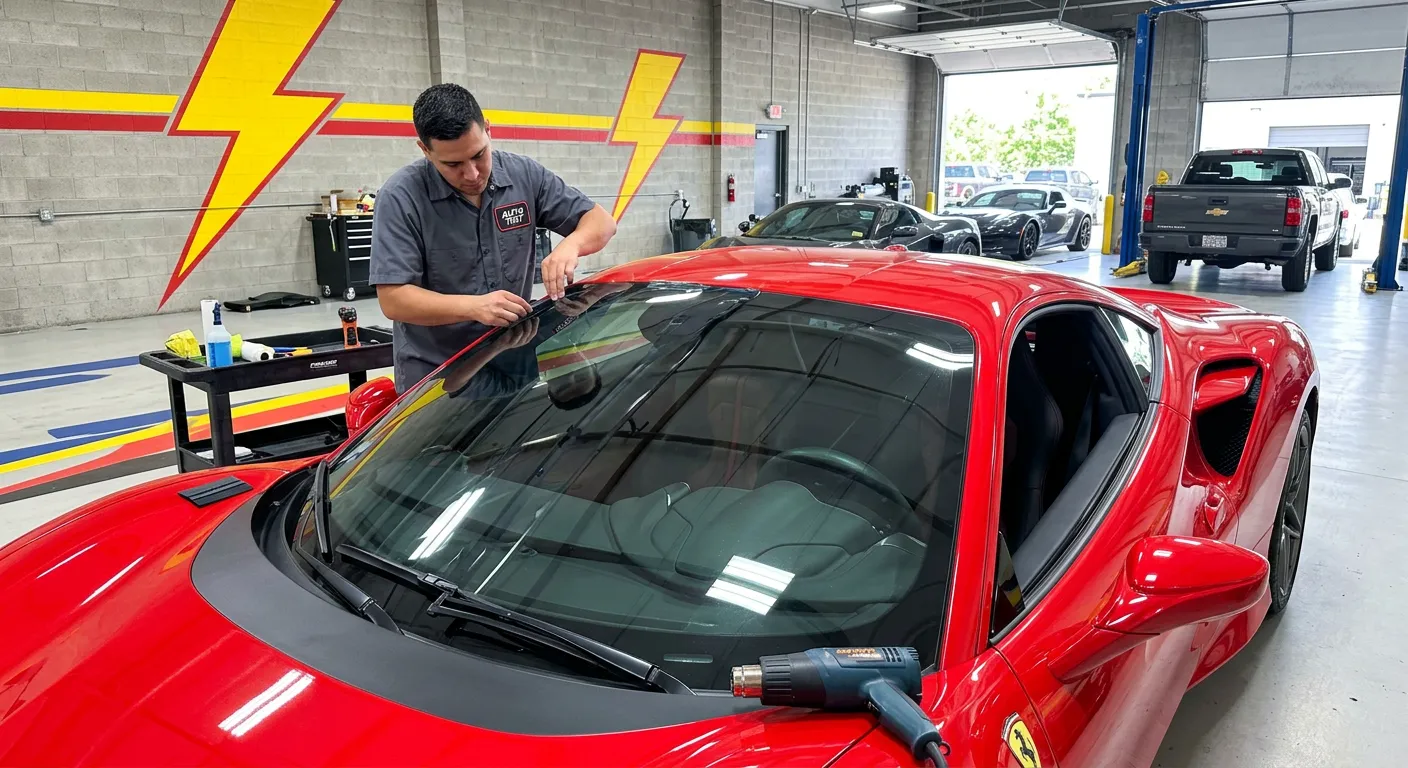
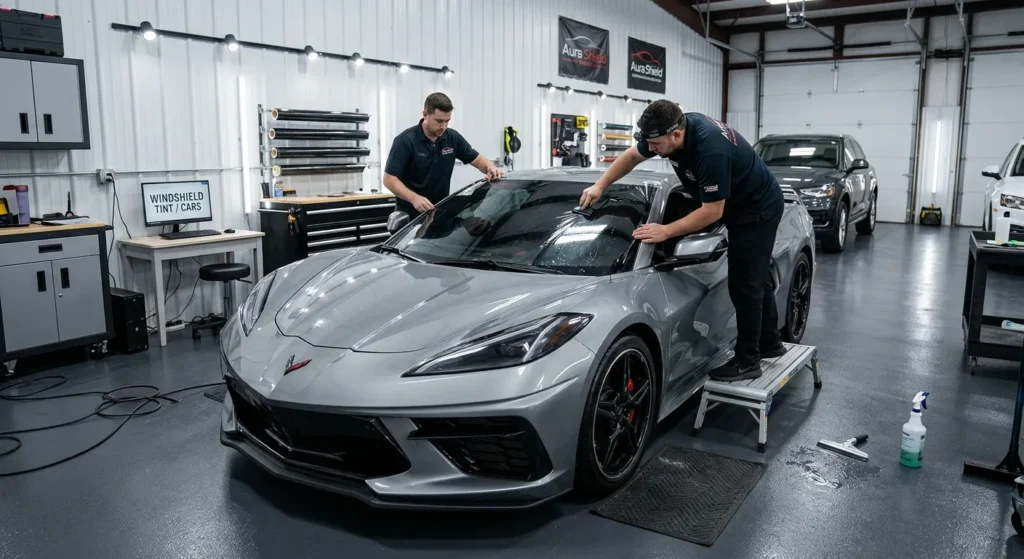
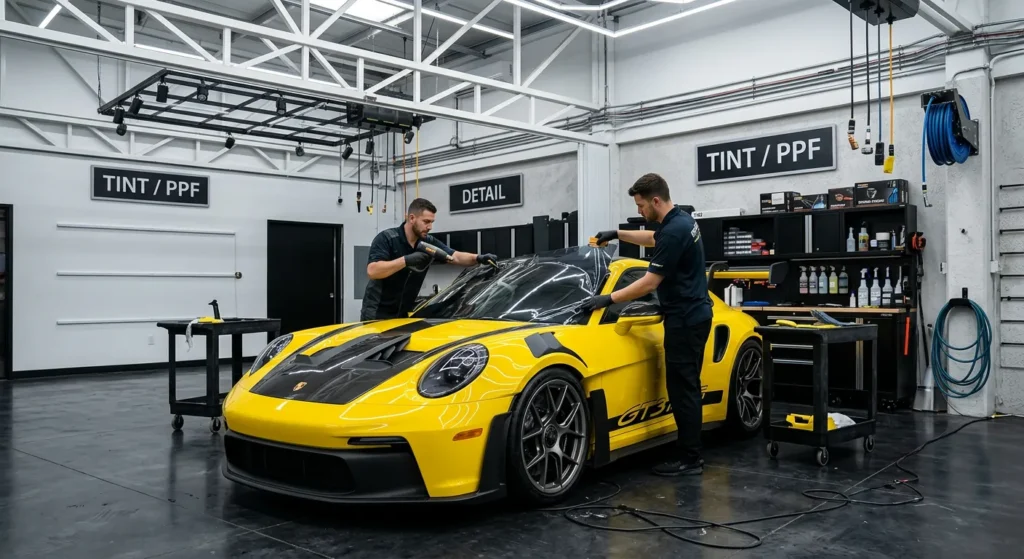
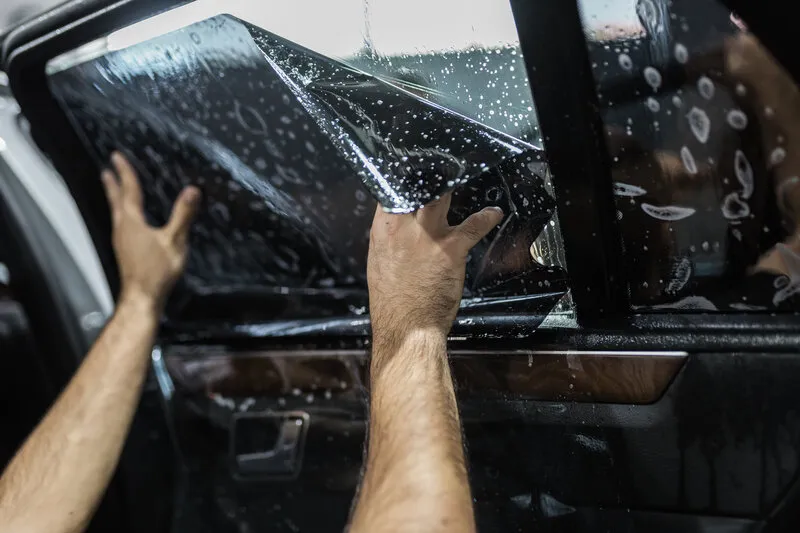
Windshield tint strips are legal in Illinois when they follow state rules. Illinois law allows a nonreflective tinted strip along the uppermost portion of the windshield, as long as it does not extend more than 6 inches down from the top of the windshield.
At Z Tech Window Tinting, our family-owned team has served Chicago’s west suburbs since 1975. We are 3M certified, a 3M vendor, and we carry warranties on our products and services. Drivers from Naperville, IL, Countryside, IL, Aurora, IL, Downers Grove, IL, Bolingbrook, IL, Lisle, IL, and nearby areas visit us for professional window tint, paint protection film, ceramic coating, vinyl wrap, detailing, paint correction, undercoating, rustproofing, remote starters, security systems, radar detectors, and car and truck accessories.
If you are thinking about a windshield tint strip for glare reduction, this guide explains what Illinois allows, why the 6-inch rule matters, and how to choose the right strip for your vehicle.
Table of Contents
Are Windshield Tint Strips Legal in Illinois?
Windshield tint strips are legal in Illinois if they meet the state’s rule for the top of the windshield. The strip must be nonreflective and must stay within the uppermost portion of the windshield. It cannot extend more than 6 inches down from the top.
That means a legal strip is not the same as full windshield tint. A strip is a narrow band at the top. Full windshield film is treated differently under Illinois law.
Here is why this matters. Many drivers want a windshield tint strip because it can help with overhead sun, sunrise glare, sunset glare, and bright winter reflections. That can make driving more comfortable, especially during morning and evening commutes.
For drivers in Naperville, IL and Countryside, IL, glare can be rough on roads like Ogden Ave, Route 59, I-88, I-355, 75th Street, and nearby streets. A legal windshield strip can help reduce some of that harsh light without covering the full windshield.
For more service details, visit our window tint service page or our main tinting page.
What Illinois Law Says About Windshield Tint Strips
Windshield tint strips are addressed in Illinois law under 625 ILCS 5/12-503. The statute says a driver may not have tinted film, reflective material, nonreflective material, window applications, signs, or posters on the front windshield, except for a nonreflective tinted film along the uppermost portion of the windshield. That strip may not extend more than 6 inches down from the top of the windshield.
Bottom line, Illinois allows a windshield strip only when it follows these points:
- It must be at the top of the windshield.
- It must be nonreflective.
- It cannot extend more than 6 inches down from the top.
- It should not obstruct the driver’s view.
- It is not the same as tinting the full windshield.
The real question is not only, “Can I get a windshield strip?” It is, “Can I get one installed in a way that follows Illinois rules?”
At Z Tech Window Tinting, our team can help drivers choose a legal-friendly windshield tint strip and explain how it fits with the rest of the vehicle’s tint.
What Does Nonreflective Windshield Tint Mean?
Windshield tint strips in Illinois must be nonreflective. This matters because reflective material can create glare for other drivers and may draw unwanted attention from law enforcement.
A nonreflective strip is designed to reduce light without creating a mirror-like surface. Most drivers want a clean, subtle look that blends with the vehicle instead of a shiny finish.
Here’s what matters. A strip that looks cool in a photo may not be the right choice under Illinois law. The film should be selected for comfort, visibility, and legal-friendly use.
When choosing a strip, ask about:
- Reflectivity
- Shade
- Visibility
- Placement
- Final size
- Vehicle windshield shape
- Illinois tint rules
- How it pairs with side window tint
A professional tint shop can help you avoid film that is too reflective, too low, or poorly placed.
Why Drivers Choose Windshield Tint Strips
Windshield tint strips are popular because they help with one of the most common driving complaints: bright sun at the top of the windshield.
A windshield strip may help with:
- Overhead sun
- Sunrise glare
- Sunset glare
- Snow glare
- Wet-road reflections
- Eye strain
- Bright sky exposure
- Cabin comfort
- A cleaner vehicle look
- Daily commuting comfort
Naperville drivers often deal with sun angles that change throughout the year. In winter, the sun can sit lower in the sky. In summer, bright overhead sun can feel harsh during daytime driving.
Now here’s the thing. A windshield strip will not block every glare angle. It mainly helps with light coming from the upper windshield area. Side window tint and rear window tint can help with glare coming through other glass areas.
That is why many drivers choose a windshield strip as part of a full window tint plan.
Windshield Tint Strips vs. Full Windshield Tint
Windshield tint strips are not the same as full windshield tint. This is an important difference for Illinois drivers.
A windshield strip covers only the top section of the windshield. Illinois allows this type of strip when it is nonreflective and does not extend more than 6 inches down from the top.
Full windshield tint covers much more of the windshield. Under Illinois law, tinted film is not allowed on the full front windshield, except for the allowed top strip.
What this means is simple. A legal windshield tint strip can help reduce glare from above. Full windshield tint can create legal problems in Illinois.
If a shop suggests full windshield tint without explaining Illinois rules, be careful. A professional installer should explain what is allowed before installing film.
How the 6-Inch Rule Works
Windshield tint strips in Illinois must stay within the 6-inch limit. The law says the nonreflective tinted film cannot extend more than 6 inches down from the top of the windshield.
This measurement matters because going too low can make the strip illegal. It can also block too much of the driver’s forward view.
The 6-inch limit is especially important on vehicles with different windshield shapes. A sports car, truck, SUV, van, Tesla, and work vehicle can all have different windshield height, angle, and visibility needs.
A professional installer should consider:
- Windshield height
- Mirror placement
- Driver visibility
- Camera and sensor areas
- Factory markings
- Film alignment
- Wiper sweep
- Illinois legal limits
The catch is that a strip that looks fine on one vehicle may look too large on another. That is why professional measurement and placement matter.
Do Windshield Tint Strips Help With Glare?
Windshield tint strips can help reduce glare from sunlight entering through the upper part of the windshield. That is the main reason many drivers choose them.
A strip may be useful during:
- Morning drives facing east
- Evening drives facing west
- Winter days with snow glare
- Summer days with strong overhead sun
- Long highway drives
- Bright open-road driving
- Low-angle sun near sunset
- Wet-road reflection conditions
The strip acts like a shaded band at the top of the windshield. It can reduce the amount of harsh light coming through that upper section.
Let’s break it down. A windshield strip helps with glare from above and ahead. It does not replace sunglasses, careful driving, or proper side window tint. It is one part of a comfort plan.
For many drivers, the best setup is a legal windshield strip plus professionally installed side and rear window tint.
Windshield Tint Strips and Illinois Weather
Windshield tint strips can be useful in Illinois weather because glare is not only a summer problem. Winter can be just as tough.
In Illinois winters, glare can come from:
- Snow
- Ice
- Wet pavement
- Salt-covered roads
- Bright clouds
- Low sun angles
- Reflective vehicles
- Roadside glass and buildings
During summer, glare can come from bright overhead sun, hot road surfaces, and long daylight hours. During spring and fall, low-angle sunlight can hit drivers during morning and evening commutes.
Here is why this matters. A windshield tint strip is a year-round upgrade. It can help during hot weather, cold weather, sunny mornings, and bright winter afternoons.
Drivers who pair a strip with quality side and rear window tint may get better all-around comfort.
Choosing the Right Windshield Tint Strip Shade
Windshield tint strips should be chosen for visibility, glare reduction, appearance, and Illinois rules. The darkest strip is not always the best strip.
A darker strip may reduce more visible light, but it can also look too bold or reduce visibility if it is installed too low. A lighter strip may offer a more subtle look while still helping with glare.
Ask yourself:
- Do I want a subtle strip or a darker look?
- Do I drive often at sunrise or sunset?
- Do I drive on dark rural roads?
- Do I want the strip to match my side window tint?
- Does my vehicle have sensors near the windshield?
- Do I want a strip only or full vehicle tint too?
- Do I care most about glare or appearance?
- Do I want 3M film installed by a certified shop?
Bottom line, the right shade should help with glare while keeping the windshield comfortable to look through.
At Z Tech Window Tinting, we can help you compare film options before installation.
3M Window Tint Options at Z Tech Window Tinting
Windshield tint strips can be part of a full 3M window tint plan. Z Tech Window Tinting is 3M certified and a 3M vendor, which means local drivers can compare trusted 3M Automotive Window Film options.
3M Ceramic IR Series
3M Ceramic IR Series is a true ceramic, non-metallized film. It is made for infrared heat rejection, UV protection, glare reduction, low reflectivity, and signal-friendly use.
This can be a strong choice for drivers who want comfort and a clean appearance.
3M Crystalline Series
3M Crystalline Series is a premium multilayer optical film. It is designed for heat rejection without needing a dark appearance.
This may be a good fit for drivers who want a lighter look with strong comfort benefits.
3M Color Stable Series
3M Color Stable Series uses nano-carbon polyester technology. It gives many vehicles a factory-style tinted appearance and is non-metallized for signal-friendly performance.
3M FX-HP Series
3M FX-HP Series uses a hybrid metal and dyed film design. It offers a classic tint appearance with glare reduction, UV protection, and heat rejection.
3M Scotchshield Security Series
3M Scotchshield Automotive Window Films Security Series is made for privacy and added glass support. It helps hold glass fragments together if glass breaks, which may slow theft attempts and reduce loose glass.
For windshield strips, the most important point is still Illinois law. The strip must be nonreflective and within the 6-inch limit.
Common Windshield Tint Strip Mistakes
Windshield tint strips can cause problems when they are installed poorly or chosen without checking Illinois rules.
Common mistakes include:
- Installing the strip too low
- Choosing reflective film
- Using low-quality film
- Blocking sensors or cameras
- Creating uneven edges
- Choosing a strip that looks too dark for the vehicle
- Not matching the rest of the tint plan
- Ignoring night visibility
- Installing over dirty glass
- Using a DIY kit with poor trimming
The real question is not whether a strip is simple. It is whether it is placed correctly, cut cleanly, and legal-friendly.
A small strip at the top of the windshield can look clean when installed well. It can look rough when edges are uneven, bubbles appear, or the strip sits crooked.
Why Professional Installation Matters
Windshield tint strips should be installed by trained professionals because placement, measurement, film quality, and trimming all matter.
A professional installer can:
- Measure the strip correctly
- Keep the strip within Illinois limits
- Use nonreflective film
- Clean the glass before installation
- Cut clean edges
- Avoid bubbles and dust
- Check sensor areas
- Explain cure time
- Help match side window tint
- Explain aftercare
After installation, the film needs time to dry. During that time, small moisture areas may appear. A good tint shop will explain what is normal and when to call with questions.
At Z Tech Window Tinting, our team uses trusted products and proven methods. We also carry warranties on our products and services.
Pairing Windshield Tint Strips With Full Vehicle Tint
Windshield tint strips often work best when paired with side and rear window tint. The strip helps with glare from the top of the windshield, while side and rear tint help with glare, heat, privacy, and UV exposure through the rest of the glass.
Popular tint goals include:
- Legal windshield strip for overhead glare
- Front side tint for glare and style
- Rear side tint for privacy
- Rear glass tint for heat and appearance
- Ceramic tint for comfort
- Security film for added glass support
- Tesla tint for large glass areas
- Tint with paint protection and ceramic coating
Z Tech Window Tinting also offers Tesla window tint, Tesla Cybertruck window tint, paint protection film, Ceramic Pro ceramic coating, vinyl wrap, and auto detailing.
What this means is simple. A windshield strip can be one part of a larger comfort and protection plan.
Why Naperville Drivers Choose Z Tech Window Tinting
Drivers asking whether windshield tint strips are legal in Illinois choose Z Tech Window Tinting because we understand Illinois tint rules, 3M film options, and local driving conditions.
Our Naperville location is at 1572 W Ogden Ave, Naperville, IL 60540. Our Countryside location is at 9825 W 55th St #D, Countryside, IL 60525.
We serve drivers from Naperville, IL, Countryside, IL, Aurora, IL, Downers Grove, IL, Bolingbrook, IL, Lisle, IL, Warrenville, IL, Plainfield, IL, Woodridge, IL, and nearby west suburb communities.
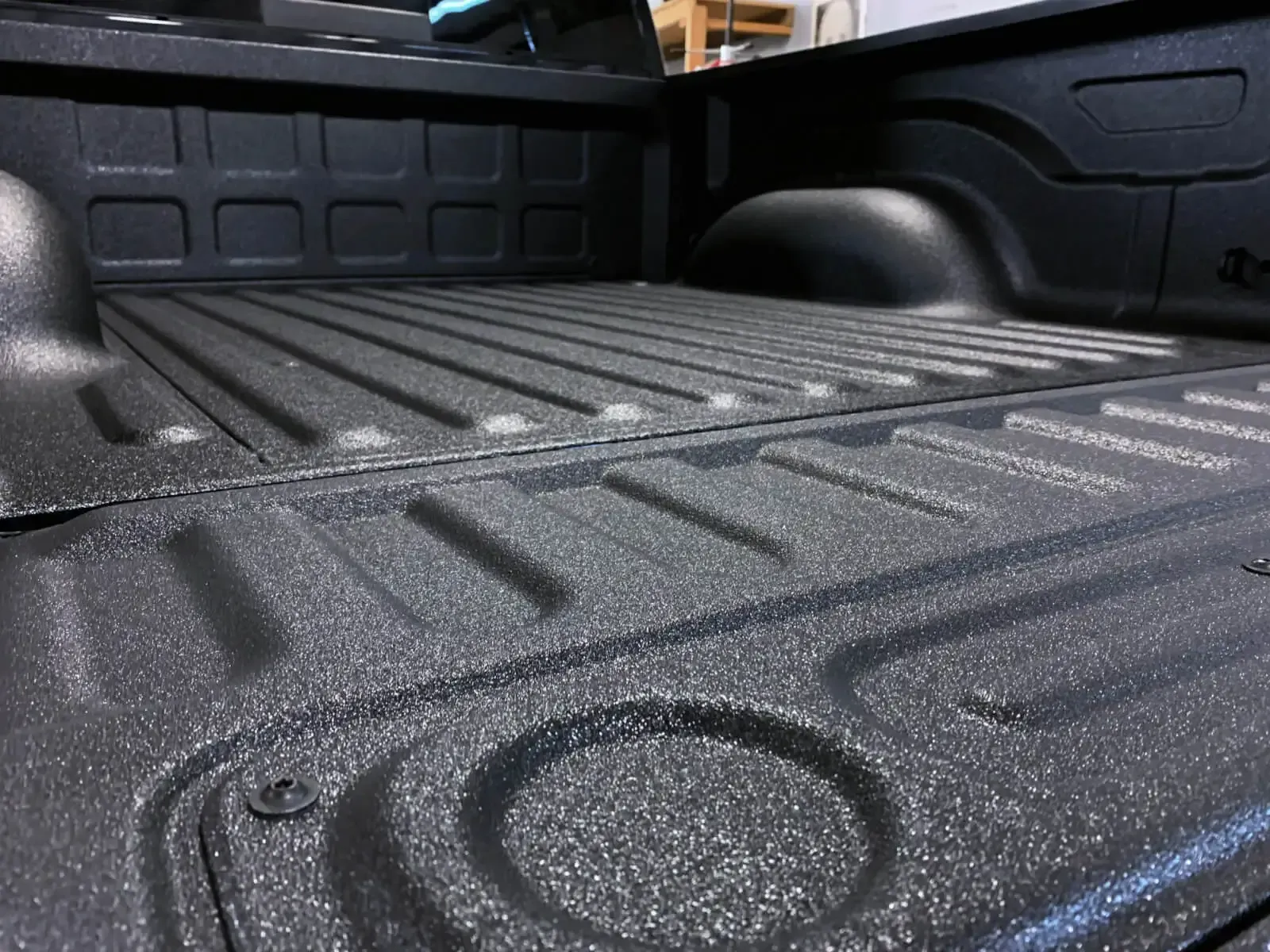
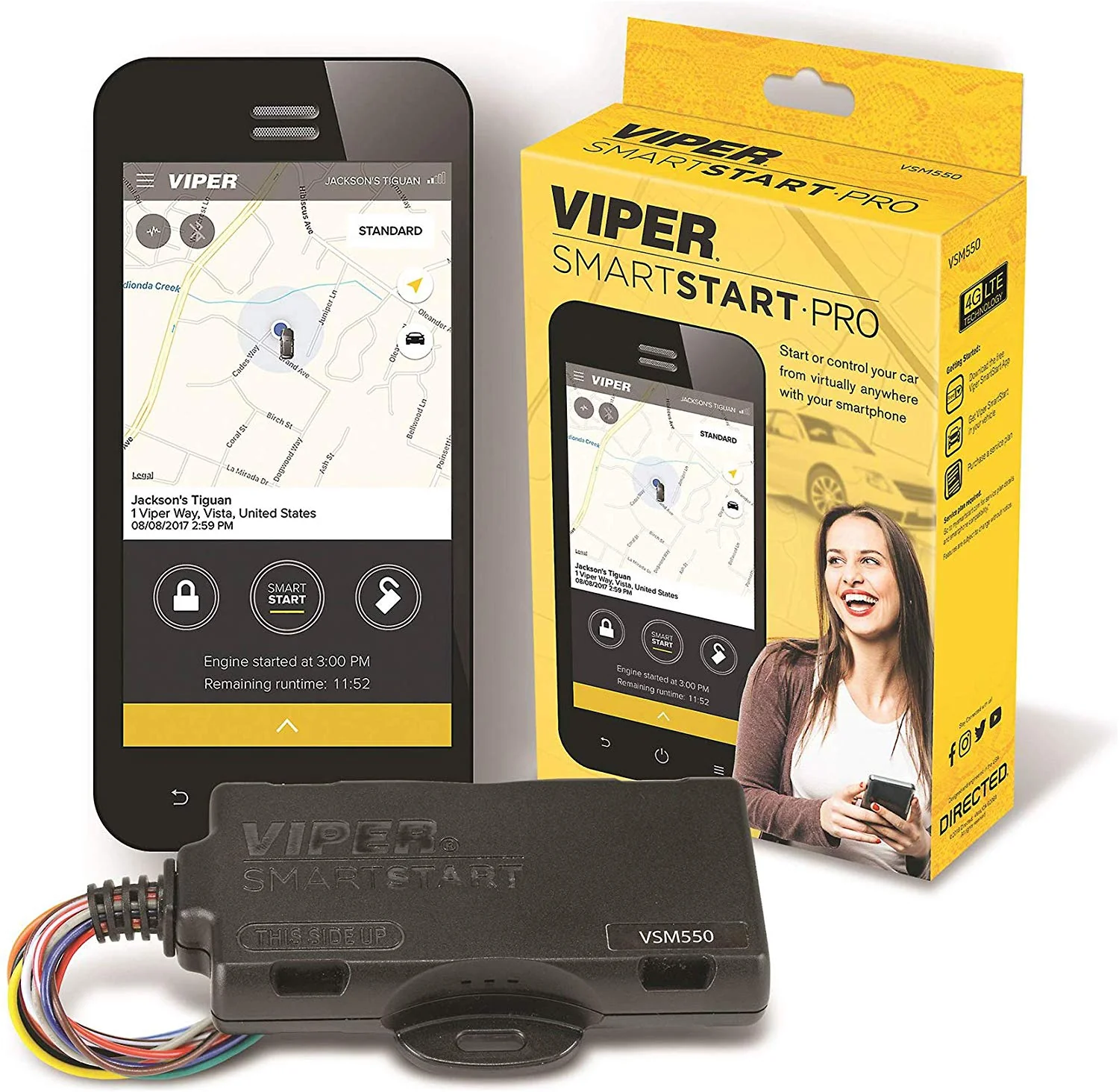
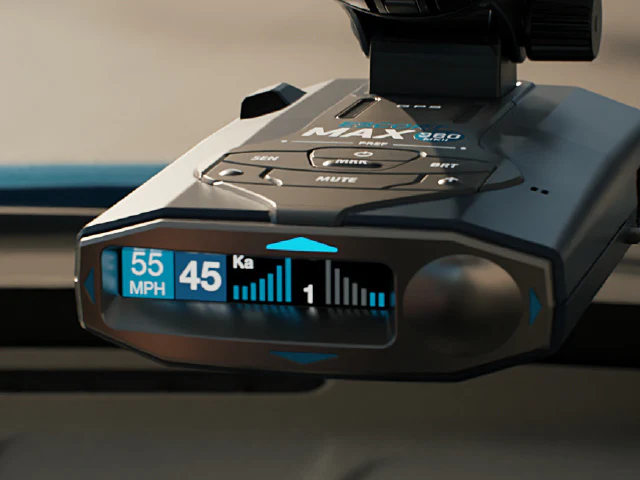
Our Naperville location has 375+ 5 star reviews, and our Countryside location has 365+ 5 star reviews. Local drivers trust our family-owned shop for window tint, windshield tint strips, paint protection film, ceramic coating, vinyl wrap, detailing, paint correction, undercoating, rustproofing, spray-on bed liners, remote starters, security systems, radar detectors, and accessories.
Now here’s the thing. You do not need to guess where the strip should go or what film to choose. Our team can explain your options before installation.
Schedule Windshield Tint Strip Installation Near Naperville, IL
If you are interested in windshield tint strips and want help choosing a legal-friendly option, contact Z Tech Window Tinting today.
Call our Naperville location at (630) 355-9555 or our Countryside location at (708) 354-9555. We are open Monday through Saturday from 8:30 AM to 5 PM.
You can also visit https://www.ztechnaperville.com/contact-us to request an appointment.
Tell us what you drive, whether you want only a windshield strip or full vehicle tint, and whether glare, heat rejection, privacy, UV protection, or appearance matters most. Our team will help you compare 3M tint options and legal-friendly choices.
FAQs About Windshield Tint Strips in Illinois
1. Are windshield tint strips legal in Illinois?
Yes. Windshield tint strips are legal in Illinois if they are nonreflective, placed along the uppermost portion of the windshield, and do not extend more than 6 inches down from the top of the windshield.
2. Can I tint my whole windshield in Illinois?
No. Illinois law does not allow tinted film on the full front windshield, except for the allowed nonreflective strip at the top.
3. How far down can a windshield tint strip go in Illinois?
A windshield tint strip in Illinois cannot extend more than 6 inches down from the top of the windshield.
4. Does the strip need to be nonreflective?
Yes. Illinois law allows a nonreflective tinted film strip on the uppermost portion of the windshield. Reflective material can create glare and may not meet the rule.
5. Can a windshield tint strip help with glare?
Yes. A windshield tint strip can help reduce glare from overhead sun, sunrise, sunset, snow reflection, and bright sky exposure through the upper windshield area.
6. Should I install a windshield tint strip myself?
Professional installation is usually the better choice because measurement, film choice, placement, and trimming matter. A poorly installed strip can be crooked, too low, bubbly, or not legal-friendly.
7. How do I schedule windshield tint strip installation near Naperville, IL?
Call Z Tech Window Tinting in Naperville at (630) 355-9555, call Countryside at (708) 354-9555, or visit https://www.ztechnaperville.com/contact-us to request an appointment.
Sources
- Illinois Statutes Chapter 625, Vehicles § 5/12-503, FindLaw, Current as of January 1, 2025, Accessed June 17, 2026.
- Illinois Compiled Statutes 625 ILCS 5/12-503, Onecle, Publication Date: n.d., Accessed June 17, 2026.
- 3M Automotive Window Film Ceramic IR Series, 3M, Publication Date: n.d., Accessed June 17, 2026.
- 3M Automotive Window Film Crystalline Series, 3M, Publication Date: n.d., Accessed June 17, 2026.